How many secrets do gate valves have? These valuable insights will instantly turn you into an industry expert.
Gate valves, seemingly ordinary components in pipeline systems, contain countless professional knowledge that engineers must master. Today we will unveil its mysterious veil, from structure to fault handling, and explain it.
There are surprisingly so many structural types of gate valves.
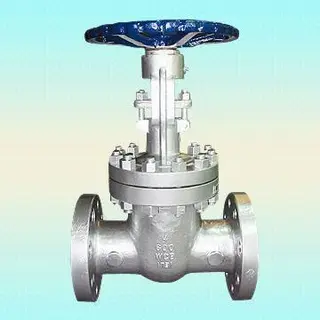
Did you know? The structure of gate valves is not uniform. According to the different valve stems, it can be divided into two categories: rising stem gate valves and non-rising stem gate valves. The valve stem thread of the rising stem gate valve is located outside the valve body, and the switch status is clear at a glance. The stem thread of the non-rising stem gate valve is located inside the valve body, making it more suitable for installation environments with limited space.
Further subdividing, according to the shape of the gate, it can be further divided into parallel gate valves and wedge gate valves. The two sealing surfaces of a parallel gate valve are parallel and usually require external force to achieve sealing. The sealing surface of the wedge gate valve is wedge-shaped, and it can achieve self-sealing by relying on the pressure of the medium.
Elastic gate valve is a new type of structure that has emerged in recent years. It is designed with an elastic groove in the middle of the gate plate, which can automatically compensate for deformation caused by temperature changes and has more reliable sealing performance. This structure is particularly suitable for high-temperature and high-pressure working conditions and has become the preferred choice in many industrial fields.
The working principle of gate valves is so simple.
The working principle of a gate valve is actually very intuitive - the gate lifting controls the flow of the medium. When the handwheel rotates clockwise, the valve stem drives the gate to rise and the channel opens. Rotate counterclockwise to lower the gate and cut off the flow of the medium.
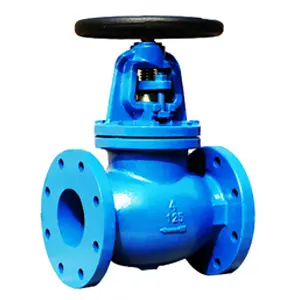
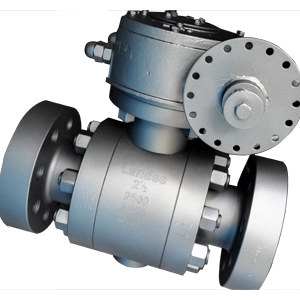
But there is a key point here: gate valves are not suitable for regulating flow! It only has two working states: fully open and fully closed. When partially opened, the high-speed flowing medium will erode the sealing surface, greatly reducing the service life of the valve. That's also why engineers tend to use globe valves or ball valves when flow regulation is needed.
The sealing principle is also worth paying attention to. Wedge gate valves rely on medium pressure to press the gate plate towards the valve seat, and the higher the pressure, the tighter the seal. Parallel gate valves usually require additional pre-tightening force to ensure sealing effectiveness. Understanding this is very helpful for valve selection and fault diagnosis.
The applicable conditions of gate valves are beyond imagination.
The use pressure range of gate valves can be competent from vacuum to 42MPa ultra-high pressure. Low pressure gate valves are commonly used in water treatment systems. Medium pressure gate valves are commonly used in the petrochemical industry. High pressure gate valves are mainly used on special occasions such as power plant boilers.
The temperature adaptability is equally amazing, with corresponding products available for low-temperature conditions ranging from -196 ℃ to high-temperature environments of 550 ℃. Low temperature gate valves are made of special materials and structures to prevent cold brittleness. High temperature gate valves need to consider the thermal expansion and creep issues of materials.
The types of media are all encompassing: water, steam, oil, acid-base solutions, and liquefied gas. However, it should be noted that media containing solid particles will accelerate the wear of the sealing surface, in which case special structure gate valves or other valve types need to be considered.
The installation form determines the effectiveness of use.
The installation of gate valves is not just about installing them casually! Horizontal installation is the most common method, but it is necessary to ensure that the valve stem is vertically upward, otherwise it will cause operational difficulties and poor sealing. In situations where space is limited, inclined installation can also be used, but the inclination angle usually does not exceed 45 degrees.
Special attention should be paid to the accumulation of fluid in the valve chamber during vertical installation. For media that may produce condensation, a drain port should be installed at the bottom of the valve body. Some special structure gate valves are specifically designed with anti-liquid accumulation function, suitable for working conditions that require vertical installation.
The installation direction also requires attention to detail. In theory, gate valves can be installed in both directions, but flow direction markings usually recommend that the medium enter from below the gate. In this way, when closing, the medium pressure helps to enhance the sealing effect while reducing the operating torque.
The connection method affects the reliability of the system.
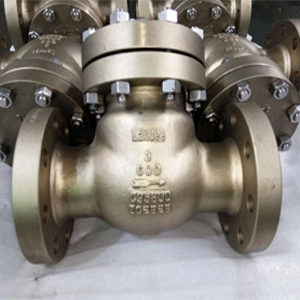
Flange connection is the most common connection form for gate valves, which is easy to disassemble and repair. According to the flange standards, it can be divided into series such as national standard, American standard, Japanese standard, German standard, etc. When selected, it must be matched with the pipeline flange. The pressure levels range from PN1.0 to PN420, covering the vast majority of industrial needs.
Threaded connections are mainly used for small-diameter low-pressure pipelines, which are easy to install but have limited pressure bearing capacity. NPT, BSPP, BSPT and other thread standards have their own characteristics, and mixing them can lead to leakage or even damage. Welding connections provide the highest sealing reliability, which is especially suitable for high-pressure, high-temperature, or hazardous medium conditions.
In recent years, new connection methods such as clamp connections and clamp connections have gradually become popular. They are easy to install and do not require flanges, and are widely used in industries with high cleanliness requirements such as food and pharmaceuticals. But the pressure bearing capacity is relatively low and not suitable for high-pressure systems.
Fully grasp well-known brands and price ranges
LANDEE VALVE represents the highest quality, with prices typically ranging from thousands to tens of thousands of yuan. They have complete material certification and performance testing reports, making them the preferred choice for major projects.
There are also a large number of economical gate valves on e-commerce platforms, with prices as low as tens of yuan. However, such products often lack strict quality control and are only suitable for temporary use in non-critical areas. Remember, valve quality is directly related to system safety, saving money may lead to big trouble!
Valve leakage is the most common fault. First, check if there are scratches or corrosion on the sealing surface. For minor damage, try grinding and repairing it. Severe damage requires replacement of the gate or valve seat. If a new valve leaks, it may be due to incomplete cleaning during installation or insufficient pressure rating selection.
Excessive operating torque can cause headaches. Check if the crystallization of the medium causes the gate to get stuck, and steam or hot water can be used for flushing. It is also possible that the valve stem threads lack lubrication and should be regularly lubricated with specialized grease. Hidden stem gate valves are particularly prone to this problem because the thread condition is difficult to observe.
Valve stem leakage cannot be ignored either. If there is a leakage in the packing box, try tightening the gland bolts or supplementing the packing. If the valve stem itself is corroded and perforated, it must be replaced as a whole. The bellows sealed gate valve completely solves this problem, but the price is much higher.
The serious malfunction of gate detachment is usually caused by improper operation. Remember not to apply excessive impact force when the valve is partially open, and do not forcefully operate the already blocked valve with an extension rod. Regular maintenance and proper use are key to extending the lifespan of valves.
After reading these, do you have a new understanding of gate valves? Next time you encounter valve problems, I believe you will be able to handle them calmly! Collect this article, and it will become an indispensable practical guide in your work.